⚡ LIMITED-TIME OFFER: Save on the Energy Revolution System™ Blueprint Today — Instant Digital Access ⚡

Energy Revolution System — The DIY Blueprint to Home Energy Independence

Energy Revolution System is a DIY energy program worth investigating. It is presented as a blueprint-based home energy solution that teaches users how to assemble a compact power system using commonly available components rather than purchasing a conventional fuel generator or investing thousands of dollars in a large solar installation.

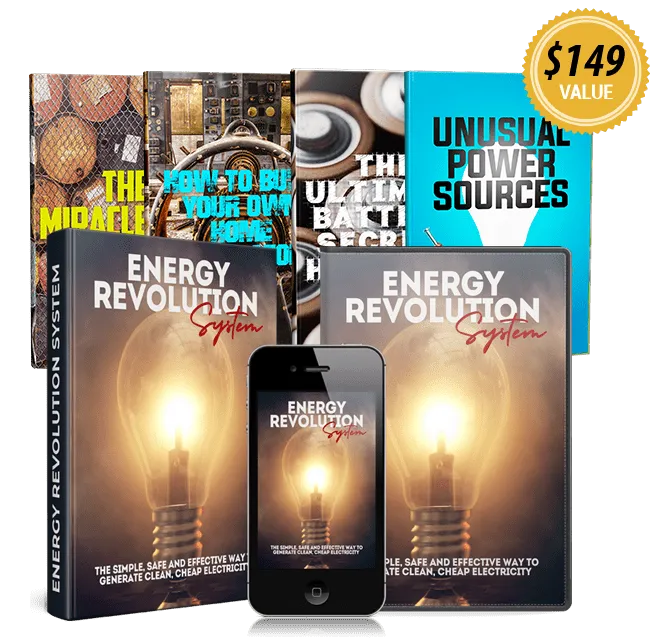
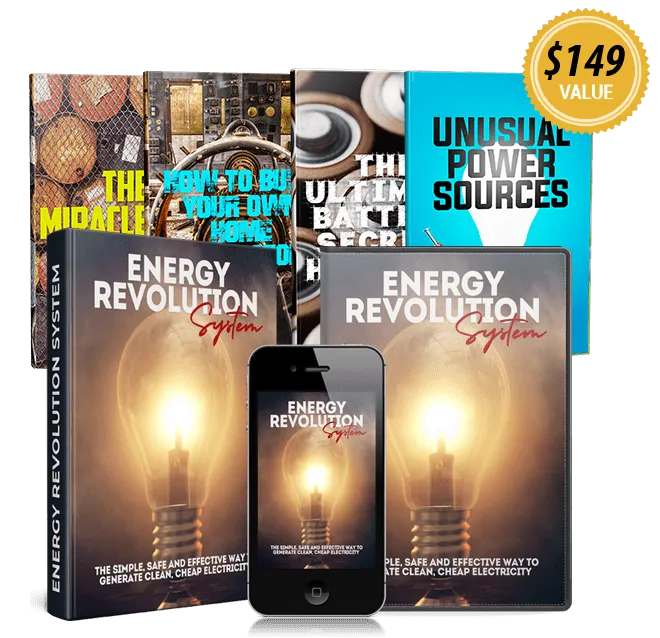
Energy Revolution System® gives you the blueprint, diagrams, and component guidance to build your own compact supplemental backup power setup.

Order Energy Revolution System
Energy Revolution System

A Structured, Beginner-Friendly DIY Blueprint

Instructions, diagrams, component lists and supporting resources — organized in one place so you're not piecing a build together from random videos and forum posts.

📘

Step-by-Step Blueprint

Diagrams, wiring guidance, component placement and safety instructions in one instructional package.

🧰

Commonly Available Parts

Built around components you can source yourself rather than a proprietary supply chain.

🔋

Compact & Portable

Designed to be more convenient than a large generator or permanent energy installation.

60-Day, 100% Money-Back Guarantee — Verify exact terms at checkout

Energy Revolution System Customer Reviews and Experiences

Illustrative sample reviews for editorial layout purposes.

Daniel R., customer
Daniel R.
Austin, Texas
★★★★★

The instructions were much easier to follow than I expected. I liked having the component list and build process organized in one place. The biggest value for me was understanding how the system works rather than simply buying another appliance.

Melissa T., customer
Melissa T.
Phoenix, Arizona
★★★★☆

I purchased the program because I wanted to learn more about DIY backup power. The blueprint helped me understand what I needed before buying components. I would recommend taking your time with the electrical side rather than rushing through the build.

Robert K., customer
Robert K.
Colorado
★★★★★

What attracted me was the DIY approach. I already enjoy working on projects, so having a structured guide was much more useful than trying to assemble everything from random online tutorials.

4.2 / 5
Based on illustrative sample feedback — not independently verified

What Is Energy Revolution System?

The Energy Revolution System is presented as a digital DIY energy blueprint designed to help homeowners create a compact supplemental power solution.

Instead of selling a conventional finished generator that arrives completely assembled, the program focuses on teaching the buyer how to build the system themselves. The supplied materials reportedly include blueprints, step-by-step instructions, component lists, wiring guidance, optimization information, and safety recommendations.

When you purchase a traditional generator, you generally pay for the hardware, manufacturing, fuel system, enclosure, electronics, and assembly. With a DIY approach, the user is responsible for sourcing components and completing the build according to the provided instructions.

Reducing dependence on utility electricity
Exploring DIY home energy generation
Creating supplemental backup power
Supporting emergency preparedness
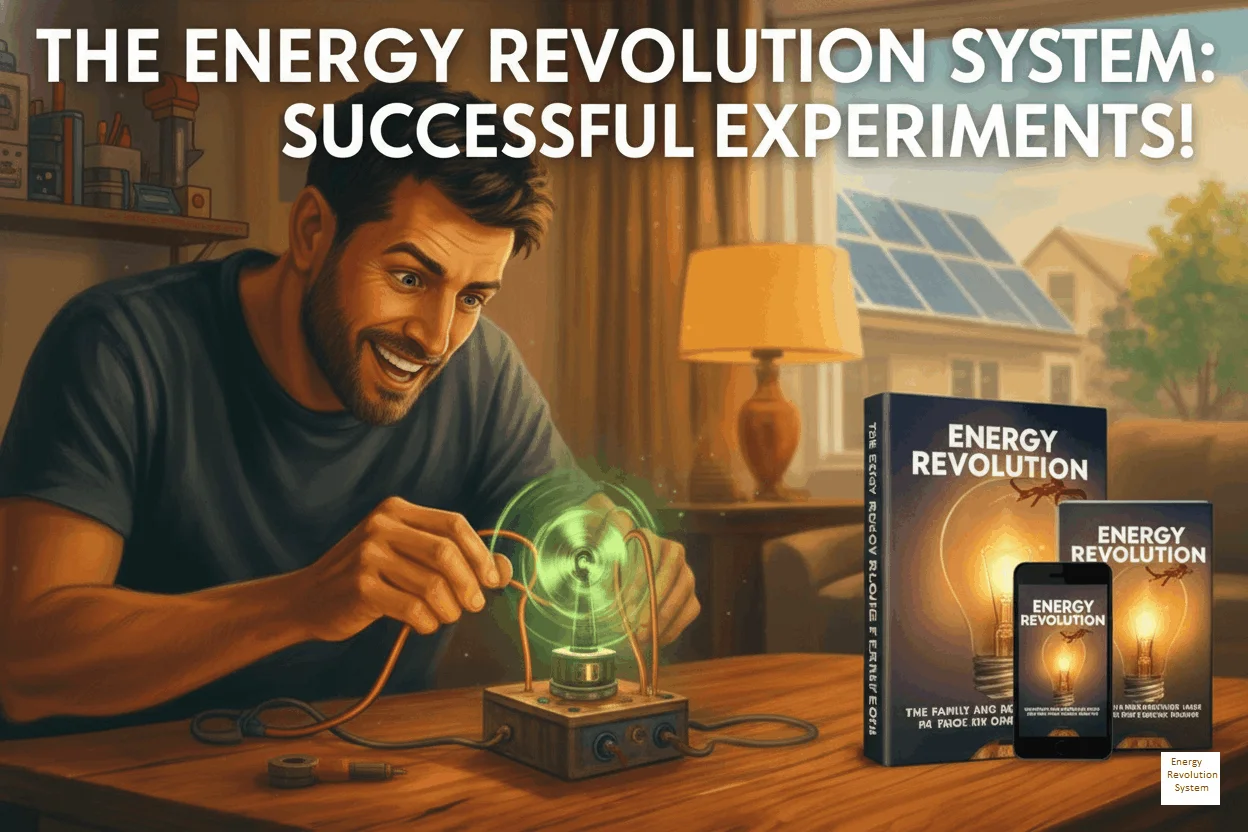
Energy Revolution System successful experiment demonstration Energy Revolution System portable power box case

How Does Energy Revolution System Work?

The basic concept presented by the product is based on optimizing electrical energy transfer through a particular coil-based configuration.

The supplied pages repeatedly reference Nikola Tesla's Bifilar Pancake Coil and related electromagnetic principles. According to the product's explanation, this type of winding configuration can influence characteristics such as capacitance, inductance, resonance, and electromagnetic behavior within an electrical circuit.

The practical idea presented by the program is to construct a compact electrical system around these principles and use it as a supplemental energy solution.

However, there is an important distinction between energy efficiency and creating energy from nothing. A responsible interpretation of the concept should not assume that a passive coil can violate the laws of physics or generate unlimited electricity without an energy source. Electrical energy must come from somewhere. The supplied pages themselves describe the system in some places as a supplemental system and refer to connections involving batteries or other sources.

The Proposed Build Process — the general process can be understood in several stages.

1

Understand Your Energy Requirements

A phone charger consumes dramatically less power than a refrigerator, microwave, water heater, or air conditioner. An energy-audit concept helps identify household requirements before configuring the system.

2

Gather the Required Components

Commonly available electrical and hardware components are used rather than a proprietary supply chain. Requirements vary by configuration, so consult current official instructions before purchasing.

3

Follow the Blueprint

The energy revolution system energy independence blueprint is described as the central instructional component. It reportedly provides diagrams, system-design information, wiring guidance, component placement, and safety instructions.

4

Assemble the System

Once the components have been sourced, the user follows the provided construction sequence. The supplied websites emphasize beginner-friendly instructions and visual guidance. Nevertheless, electrical construction should never be treated casually.

5

Test and Configure

After assembly, the system needs to be checked and tested appropriately. Users should begin with loads appropriate for their configuration rather than automatically assuming that the finished build can operate every appliance in a house.

PLACEPUSHPULL
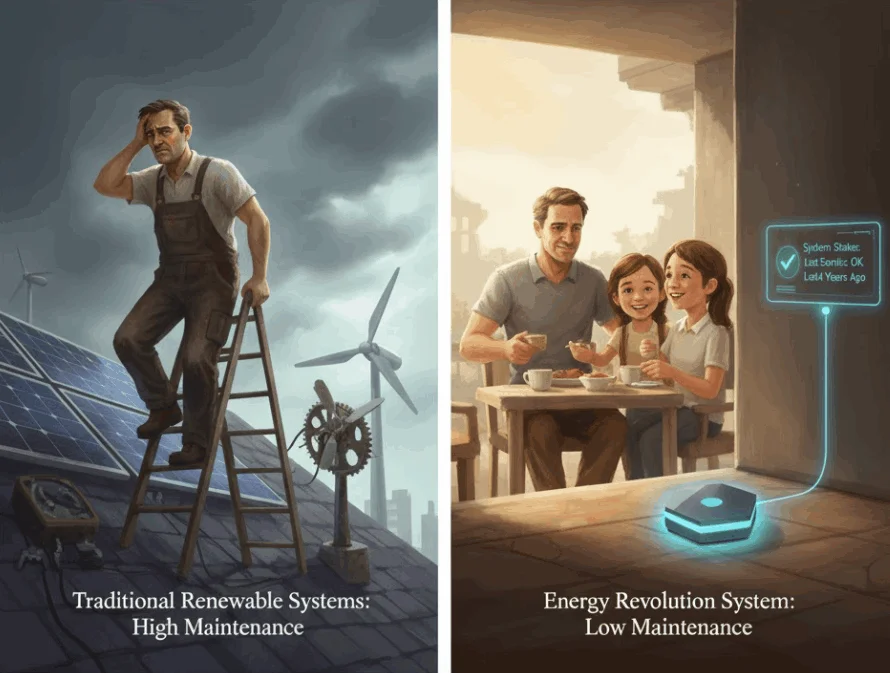
Energy Revolution System vs traditional renewable systems — low maintenance comparison

How To Use Energy Revolution System?

The proposed build and use process, from planning to testing.

1

Audit Your Energy Needs

Identify which devices you actually want to power before selecting a configuration.

2

Source Components

Use the sourcing guide to gather commonly available electrical and hardware parts.

3

Follow the Blueprint

Work through the diagrams and wiring guidance in the recommended sequence.

4

Assemble the System

Complete construction using the provided step-by-step sequence and safety guidance.

5

Test & Configure

Check the finished build and begin with loads appropriate for your configuration.

What Makes Energy Revolution System Great?

The key features described across the Energy Revolution System program.

01

Energy Revolution System DIY Home Generator Blueprint

Instead of requiring users to reverse-engineer a complicated electrical project, the concept is built around structured instructions — visual blueprints, step-by-step explanations, component lists, wiring guidance, and safety information, organized in one place.

02

Energy Revolution System Power Box Concept

A compact design can theoretically be more convenient than a large generator or permanent energy installation — particularly interesting for limited space, workshops, cabins, RVs, or emergency-preparedness applications.

03

Bifilar Pancake Coil Design

Tesla's bifilar coil arrangement has a legitimate historical place in electrical engineering, winding two conductors in a particular relationship that produces electrical characteristics different from a conventional single-wire coil.

04

Beginner-Friendly Instructions

The instructions are described as suitable for people without extensive technical experience, including diagrams and, on some versions, video tutorials — a predefined learning path rather than piecing information together independently.

05

Component Sourcing Guide

A list of required materials and guidance about where to obtain them — reducing one of the biggest frustrations in DIY projects and giving buyers a chance to compare prices between local hardware stores and online suppliers.

06

Energy Audit Resources

A home power system should ideally begin with an understanding of the home's energy consumption. The supplied program describes an energy audit worksheet intended to help users identify their electricity requirements before building their system — a sensible approach, since someone interested primarily in emergency lighting and phone charging has very different requirements from someone expecting to operate refrigeration, heating, or air conditioning.

07

Maintenance and Optimization Guidance

The supplied materials also describe maintenance and optimization resources, reportedly covering connection checks, battery care, system maintenance, and ways to optimize the setup over time. Ongoing maintenance is important because loose connections, damaged wires, degraded components, and incorrect configurations can create performance or safety problems.

What's Inside Energy Revolution System?

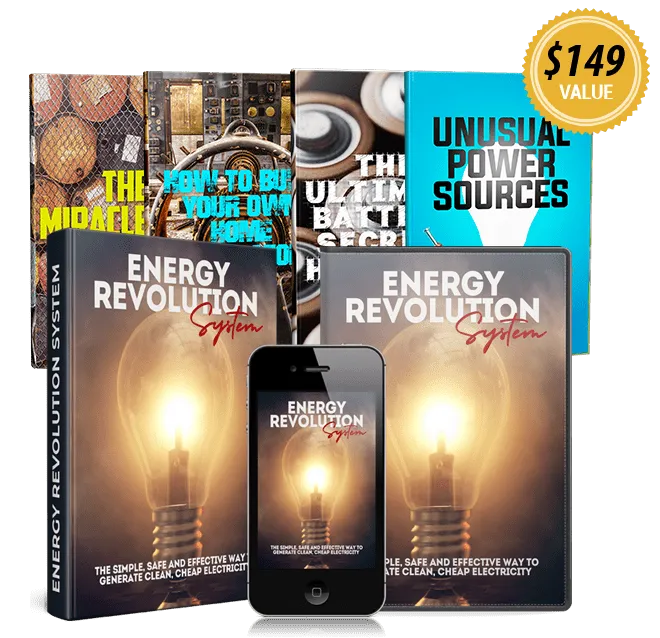
The energy revolution system diy generator kit is better understood as a digital instructional package rather than a traditional preassembled generator kit. The exact contents can vary depending on the version or sales page, but the supplied references describe several major resources.

Energy Independence Blueprint

The energy revolution system energy independence blueprint is described as the central guide. It reportedly explains the overall system design, component placement, wiring diagrams, safety considerations, and construction process.

Step-by-Step Tutorials

Some versions of the program describe video tutorials that walk users through the project. This can be particularly useful because visual demonstrations often make electrical concepts easier to understand.

Component List

A component sourcing guide is intended to tell users what materials they need. This reduces uncertainty and can make budgeting easier.

Energy Audit Worksheet

The energy audit resource is intended to help users understand their household consumption before deciding what configuration they require.

Maintenance Manual

The maintenance information provides guidance for keeping connections and components in good condition.

Safety Information

Safety instructions are another important part of the package. Because this is an electrical project, users should follow the supplied safety procedures and applicable local electrical requirements.

Benefits of Energy Revolution System

01

Lower Barrier to Entry

One of the biggest attractions of a DIY approach is cost. A professionally installed whole-home energy system can require substantial capital. A DIY blueprint-based approach potentially allows someone to experiment with a smaller project without immediately committing to a major installation. The reference pages describe relatively inexpensive construction using commonly available materials, although actual costs will vary.

02

Learn How Your Power System Works

The energy revolution system home energy solution isn't simply about having another device. There is educational value in understanding electrical consumption, components, wiring, energy storage, and system configuration. For DIY enthusiasts, this learning experience can be one of the most valuable parts of the program.

03

Backup Power Potential

The supplied websites position the system as a potential energy revolution system emergency power generator or supplemental backup solution for lower-demand devices — lighting, chargers, fans, and selected appliances depending on the configuration. Users should never assume a DIY build automatically replaces a certified whole-house backup generator.

04

Portability

The compact design described by the product pages can make the concept interesting for people who don't want a permanent installation. A portable setup can potentially be moved between locations or stored when it isn't required.

05

No Traditional Fuel Requirement

Unlike gasoline or diesel generators, a system based on electrical components does not require regular gasoline refills — attractive during emergencies when fuel may be difficult to obtain. However, the actual energy source and storage configuration still matter; a system does not become energy-independent simply because it doesn't burn fuel.

06

Interest in Off-Grid Living

For people researching energy revolution system off grid power, the program may provide an interesting starting point. Off-grid living requires more than one device — a genuinely resilient off-grid setup normally needs careful planning around generation, storage, inverters, wiring, load management, safety, and redundancy.

Energy Revolution System Energy Independence: What Does It Really Mean?

The phrase energy revolution system energy independence is attractive, but it deserves a realistic interpretation. Energy independence doesn't necessarily mean that a household can disconnect completely from its local utility immediately. Instead, energy independence can exist on a spectrum.

At one end, you may simply want enough backup capacity to keep essential electronics operating during a short outage. Further along the spectrum, you may want to offset part of your monthly electricity consumption. At the extreme end, complete off-grid living requires a carefully engineered energy ecosystem.

The Energy Revolution System can potentially be viewed as one component of that broader journey rather than automatically assuming it will make an entire home independent of the electrical grid. That distinction is important for making an informed purchase decision.

Short-Outage BackupPartial OffsetFull Off-Grid

Why Choose Energy Revolution System?

There are several reasons someone might consider this program.

1

DIY Rather Than Contractor-Dependent

The program is designed around self-assembly — appealing for people who enjoy learning and building things themselves.

2

Structured Information

The program brings its instructions, diagrams, sourcing information, and optimization guidance into one package.

3

Potentially Lower Project Cost

The reference pages emphasize affordable materials and a lower entry cost compared with large professionally installed systems.

4

Flexible Applications

Depending on the configuration, the concept can be explored for household energy savings, emergency preparedness, workshops, cabins, and other situations.

5

Educational Value

The program can also serve as an introduction to electrical and electromagnetic concepts for DIY enthusiasts.

Who Should Use Energy Revolution System?

Good Fit

  • Homeowners interested in reducing energy costs — a DIY framework rather than requiring an immediate large investment in a professionally installed system.
  • DIY enthusiasts who enjoy building, experimenting, and understanding how things work.
  • Emergency preparedness enthusiasts preparing for storms, outages, or temporary grid interruptions.
  • Cabin and RV owners who need flexible energy solutions.
  • Environmentally conscious users looking to reduce dependence on conventional electricity.

May Not Be a Good Fit

  • Wants a completely finished generator
  • Doesn't want to assemble anything
  • Expects unlimited household power
  • Assumes every appliance can automatically be powered
  • Has no interest in understanding electrical safety
  • Wants guaranteed electricity-bill savings

In those situations, a professionally engineered and certified energy system may be a better choice.

Energy Revolution System Pros and Cons

Pros

  • Beginner-OrientedThe program emphasizes step-by-step instructions and diagrams.
  • DIY FlexibilityUsers can source components themselves and build according to the provided design.
  • Potentially AffordablePositioned as a lower-cost alternative to major professionally installed energy projects.
  • EducationalThe project introduces users to electrical and electromagnetic concepts.
  • Portable ConceptThe compact design described by the product pages can be useful for flexible applications.
  • Backup Power PotentialThe system may be useful for selected lower-power loads when properly configured.
  • No Conventional FuelThe concept does not rely on a gasoline or diesel engine for operation.

Cons

  • Requires DIY WorkThis isn't necessarily a plug-and-play appliance.
  • Component Costs Are SeparateThe digital program does not mean every physical component is included in the purchase price.
  • Results Can VaryElectricity savings aren't guaranteed and depend on implementation.
  • Electrical Safety MattersIncorrect wiring can create serious risks.
  • Not Automatically a Whole-Home GeneratorUsers shouldn't assume the system will operate every appliance in a home.
  • Conflicting Offer InformationThe supplied websites currently display different prices and guarantee terms, so buyers should verify the exact offer on the checkout page before purchasing.

Energy Revolution System Bonuses

The supplied versions of the Energy Revolution System describe additional resources beyond the core blueprint. Depending on the current offer, these may include the items below. Because bonus packages can change, buyers should verify the exact inclusions on the official checkout page.

Bonus

Energy Audit Worksheet

Helps users estimate household energy requirements before beginning the build.

Bonus

Component Sourcing Guide

Can reduce the time spent figuring out which components to purchase.

Bonus

Video Tutorials

Some versions describe a complete video walkthrough designed to demonstrate the construction process visually.

Bonus

Maintenance and Optimization Manual

Intended to help users maintain their system and understand potential optimization opportunities.

Bonus

Lifetime Digital Access

One supplied page states that its digital resources are available for continued access, allowing users to revisit the material when upgrading or expanding their system.

The Science Behind Energy Revolution System

The supplied pages repeatedly reference Nikola Tesla's Bifilar Pancake Coil and related electromagnetic principles. According to the product's explanation, this type of winding configuration can influence characteristics such as capacitance, inductance, resonance, and electromagnetic behavior within an electrical circuit.

The practical idea presented by the program is to construct a compact electrical system around these principles and use it as a supplemental energy solution.

"Electrical energy must come from somewhere — a passive coil cannot violate the laws of physics or generate unlimited electricity without an energy source."
Bifilar
Coil design
Supplemental
Not a sole power source
Battery-Linked
Requires a connected source
Beginner
Level instructions
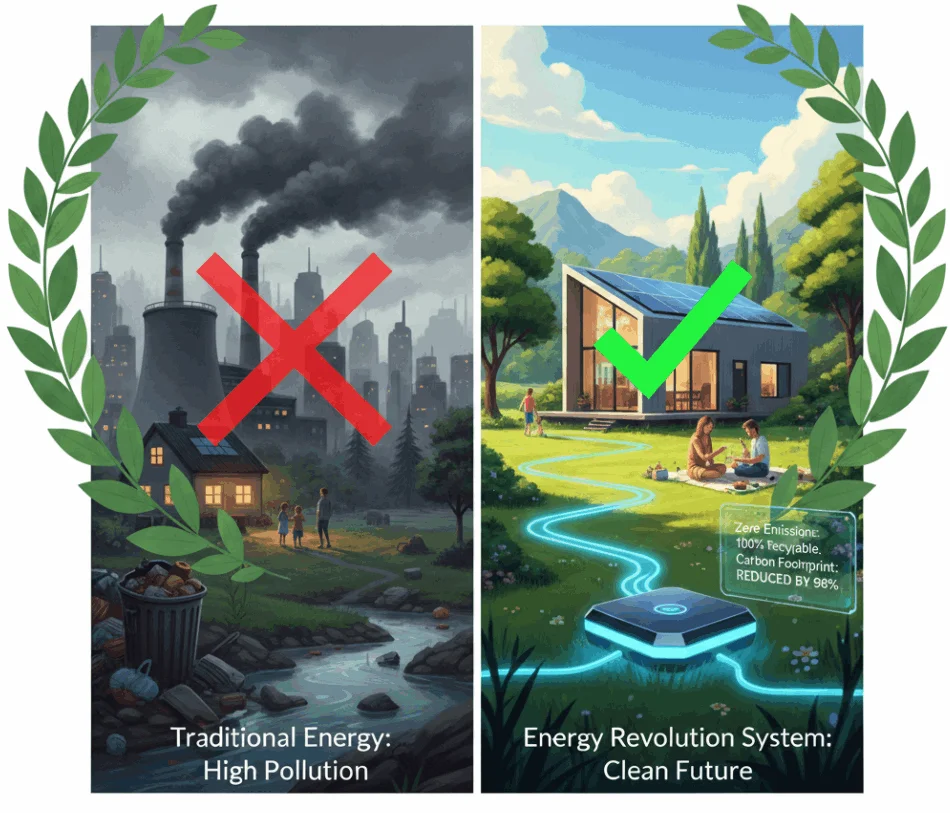
Energy Revolution System vs traditional energy — clean future comparison

Choose Your Energy Revolution System Package

⏳ Reference pages show conflicting offers — verify the exact current price at checkout
60-Day Money-Back Guarantee badge

Energy Revolution System Money-Back Guarantee

The supplied pages advertise a money-back guarantee, but the stated duration is inconsistent.

One source advertises a 60-day, 100% money-back guarantee.

Another supplied version describes a 180-day guarantee.

Because these terms conflict, readers should verify the exact guarantee displayed at checkout for the offer they are purchasing.

A money-back guarantee can reduce the financial risk associated with purchasing a digital information product, but it does not necessarily eliminate the time, component, or labor costs involved in building a DIY system.

Order Energy Revolution System

Energy Revolution System Frequently Asked Questions

Answers to the most common questions about Energy Revolution System.

The space requirement depends on the configuration and the components used. One attraction of the system is its compact DIY approach, which can make it easier to accommodate than larger traditional generator installations.

A DIY project can generally be approached in stages, particularly when components are sourced separately. However, users should follow the recommended assembly sequence rather than improvising connections or operating an incomplete system.

The tools required depend on the specific configuration. Basic hand tools and electrical testing equipment may be needed, while more advanced modifications could require additional equipment. Checking the current component and tool list before starting is recommended.

The system is promoted around commonly available components, which can make replacement sourcing easier than relying entirely on proprietary hardware. Availability will naturally vary by location.

The instructional nature of the program may allow users to adapt their setup around their particular requirements. However, customization should only be performed when the electrical ratings and safety requirements are fully understood.

A failed component should be identified and replaced with one having the appropriate electrical specifications. Users should avoid substituting components based solely on appearance or price.

Expansion may be possible depending on the architecture and components used. Before adding batteries, loads, or other hardware, the complete system should be checked for compatibility and capacity.

It may be interesting for apartment residents who want a compact supplemental power project. However, renters and apartment owners should consider available space, building rules, electrical restrictions, ventilation requirements, and whether modifications to the property's electrical system are permitted.

DIY enthusiasts may find the concept particularly interesting for workshops and garages where having supplemental power can be useful. The electrical requirements of tools should be checked carefully before connecting them.

A properly configured supplemental power system can potentially be useful during an outage. The available runtime and supported devices depend on the system's energy capacity and the electrical loads being used.

Start by separating essential and non-essential loads. Lighting, communication devices, and selected small electronics generally have different requirements from heating, cooling, cooking, or large motor-driven appliances. Prioritizing loads can help make limited backup capacity more useful.

The effect of weather depends on the specific energy source and components incorporated into the setup. Temperature, humidity, moisture, and extreme conditions can affect electrical equipment, so components should be installed and stored according to their specifications.

DIY electrical equipment should be periodically inspected for loose connections, damaged insulation, corrosion, unusual heat, and other signs of deterioration. The appropriate inspection schedule depends on the components and operating environment.

The program is marketed toward people without advanced electrical backgrounds, but some basic terminology is unavoidable. Beginners should take time to understand voltage, current, power, polarity, capacity, and electrical ratings before assembling or modifying a system.

It is generally better to understand the complete design and verify the component specifications before purchasing everything. This reduces the possibility of buying incompatible or incorrectly rated parts.

Energy Revolution System complete package

Don't Wait — Start Your Energy Revolution Today

Get instant access to the full blueprint, component guide, and bonus resources before this offer changes.

[ $299 ] [ $149 ]
Order Energy Revolution System
🔒 Secure Checkout 🚚 Free Shipping 🛡️ 60-Day Guarantee ⭐ 4.2/5 Rated

How Energy Revolution System Checkout Works?

🖱️

Click Order

📦

Enter Shipping

💳

Enter Payment

✅

Confirmed & Shipped

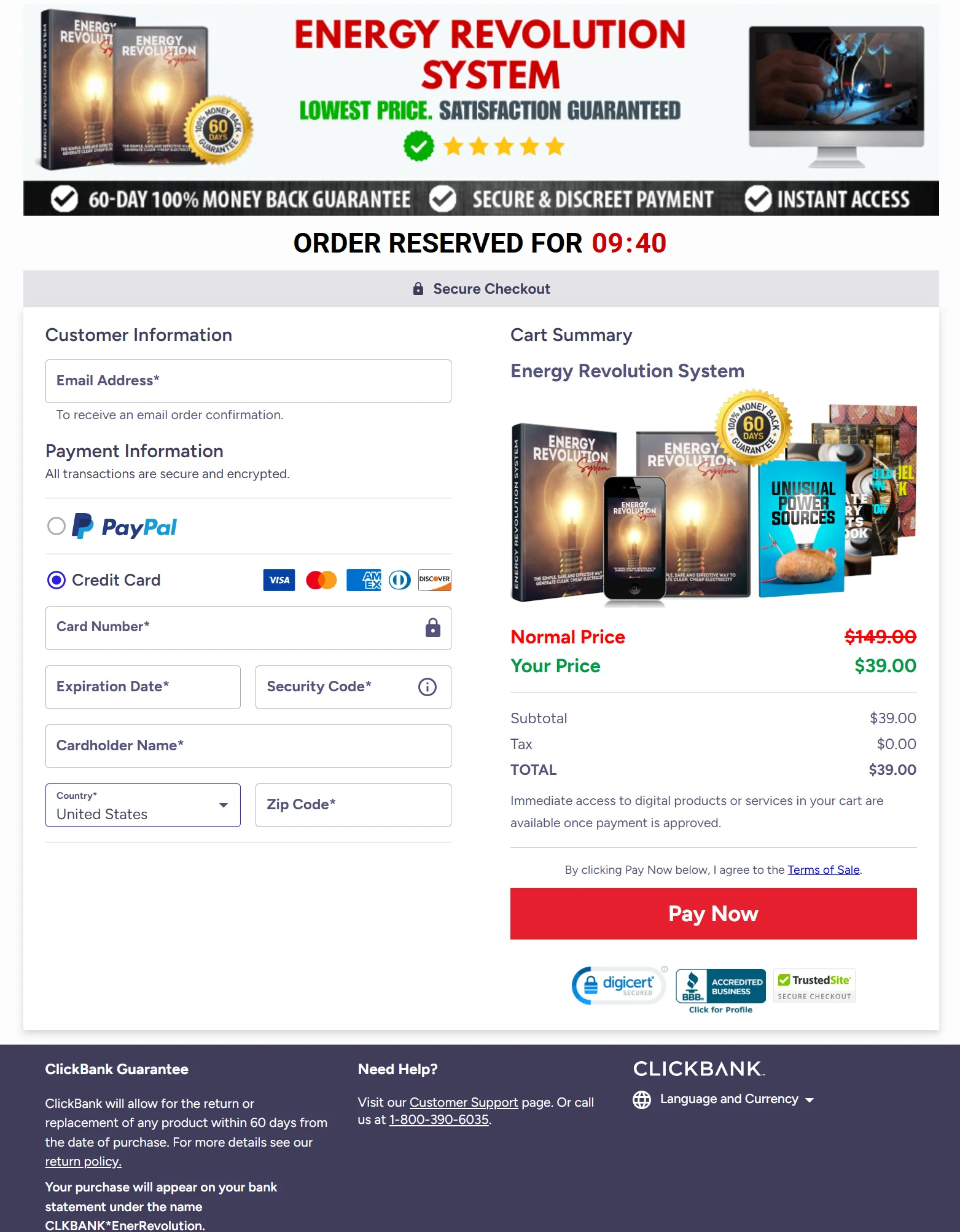
This is a one-time payment for digital program access on the checkout page shown; verify pricing and any additional line items before completing your order.

Energy Revolution System secure checkout page screenshot

Secure & Encrypted

Checkout is processed through an SSL-encrypted, secure payment gateway.

VISAMASTERCARDAMEXPAYPAL

Refund Policy

A money-back guarantee is advertised (60 or 180 days depending on the source page). Verify the exact terms shown at checkout.

Support

Questions about your order? Contact support@energyrevolutionsystem.com

"Having the component list and build process organized in one place made this so much easier to approach." — Daniel R.
"The blueprint helped me understand what I needed before buying components." — Melissa T.